
Employee turnover rarely happens without warning. In most organizations, people do not suddenly decide to leave overnight. The signs usually appear earlier in behavior, performance, communication, morale, and team dynamics. The problem is that many HR leaders and managers miss those signals until resignations start stacking up. By then, the business is already dealing with lost productivity, hiring costs, workflow disruption, and lower employee morale.
High turnover can damage more than staffing levels. It can weaken employee engagement, increase burnout, hurt retention, and create long-term culture problems. That is why HR leaders need to spot employee turnover warning signs early and respond with a clear retention strategy. When you understand what employees are showing you before they leave, you can take action that improves workplace satisfaction, strengthens manager support, and protects your talent pipeline.
This guide explains ten employee turnover warning signs HR leaders should never ignore. It also helps you understand why these red flags matter and what they may reveal about your employee experience, leadership style, and workplace culture.
Why employee turnover warning signs matter
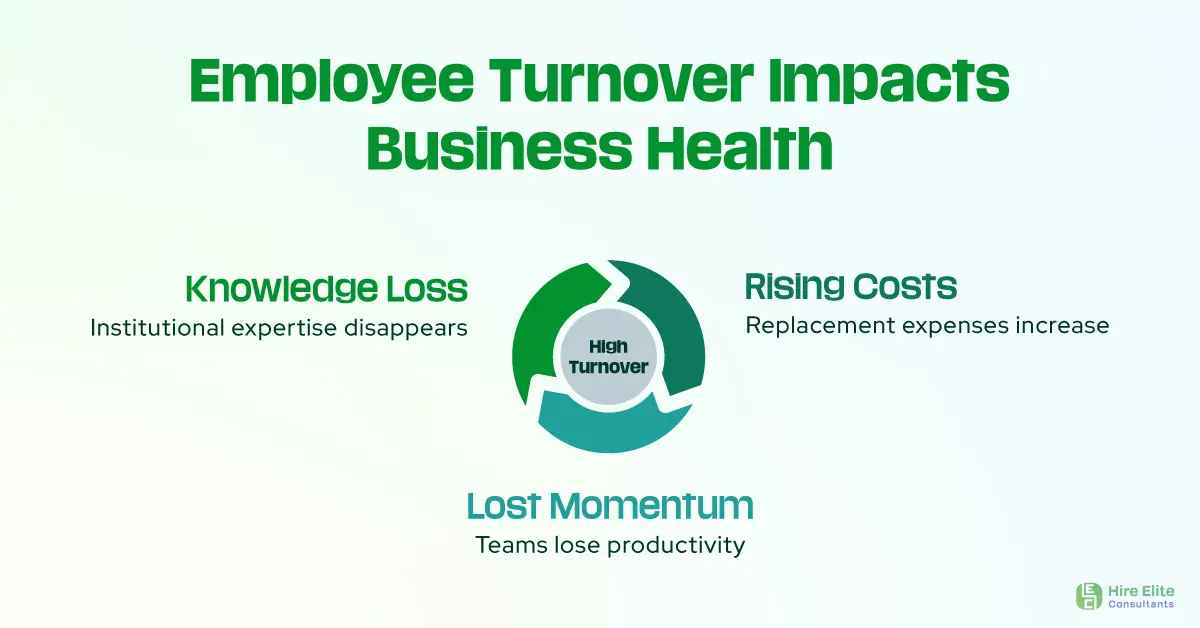
Employee turnover is not only an HR metric. It is a business health indicator. When employees disengage, teams lose momentum. When top performers leave, replacement costs rise and institutional knowledge disappears. When turnover becomes a pattern, it often points to deeper issues such as poor communication, unclear career growth, weak management, low recognition, compensation concerns, or an unhealthy work environment.

HR leaders who monitor employee behavior, engagement trends, and manager feedback can often identify risk before employees submit notice. That early awareness creates room for meaningful conversations, better workforce planning, and stronger employee retention efforts.
1. Employee engagement suddenly drops
One of the clearest turnover warning signs is a noticeable decline in employee engagement. An employee who once contributed ideas, joined discussions, met deadlines, and showed enthusiasm may begin to pull back. They may participate less in meetings, stop volunteering for projects, or show little interest in team goals.
This shift often signals emotional disconnection from the organization. People usually disengage before they resign. When employees feel unheard, undervalued, overworked, or uncertain about their future, their commitment starts to fade. HR leaders should treat falling engagement as an early retention signal, not just a performance issue.
2. Productivity and work quality start slipping
A drop in productivity does not always mean an employee lacks skill or discipline. In many cases, it reflects frustration, stress, burnout, or an active job search. Employees who are considering leaving often reduce their discretionary effort. They may complete only the minimum required work, miss details they once handled well, or stop pushing for strong results.
This warning sign becomes more important when the decline appears without a clear personal or operational reason. HR teams should look at workload balance, manager relationships, support systems, and overall job satisfaction before assuming the issue is purely performance based.
3. Absenteeism or late arrivals increase
Frequent absences, repeated late arrivals, and last-minute time-off requests can signal a higher turnover risk. While attendance issues can have many causes, they often point to lower motivation, rising stress, or disconnection from the workplace. In some cases, employees may even use time away to attend interviews or deal with emotional exhaustion caused by a poor employee experience.
HR leaders should avoid rushing to discipline without context. A pattern of absenteeism may reveal workload pressure, manager conflict, limited flexibility, or growing dissatisfaction. When attendance changes suddenly, it is worth exploring what has shifted in the employee’s work environment.
4. Employees stop talking about the future
Employees who plan to stay often talk about future projects, long-term goals, internal growth, and new responsibilities. Employees who are preparing to leave often stop making those future-focused comments. They may show less interest in professional development, internal promotions, training programs, or strategic planning.
This silence matters. It can suggest that the employee no longer sees a future with the company. HR leaders should pay attention when workers stop asking about growth opportunities or stop discussing their career path. A missing sense of progression is one of the most common causes of employee turnover, especially among ambitious and high-potential talent.
5. Manager relationships become strained
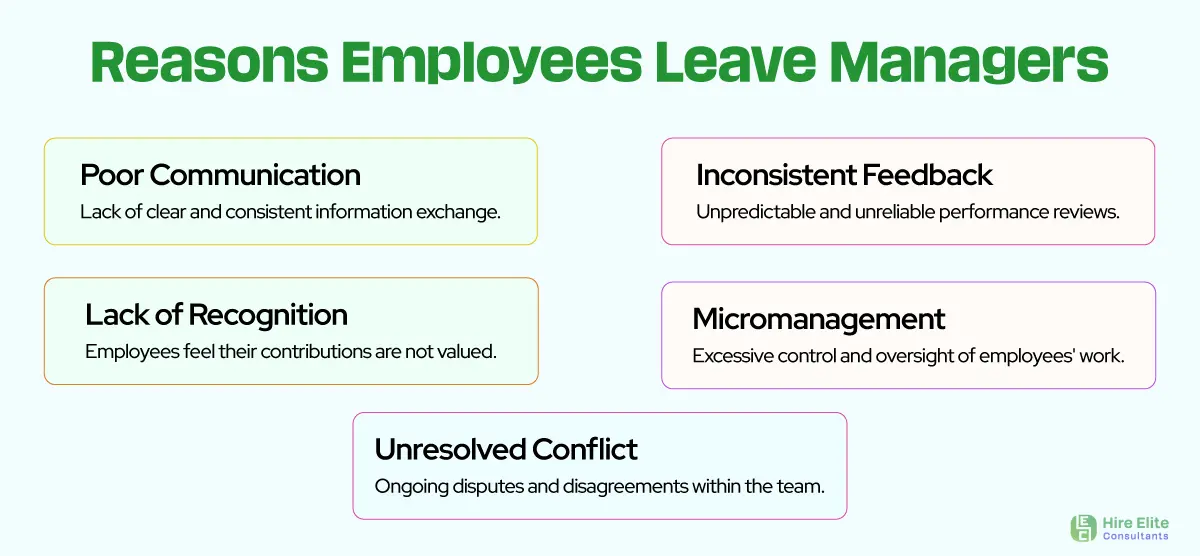
Many employees do not leave companies first. They leave managers. Poor communication, lack of recognition, inconsistent feedback, micromanagement, and unresolved conflict can all increase turnover risk. When employees seem more withdrawn around a manager, become defensive in one-on-ones, or avoid direct communication, that tension may point to a deeper retention problem.
HR leaders should pay close attention to patterns across teams. If one department has higher turnover, lower morale, or more complaints than others, leadership quality may be the issue. Healthy manager-employee relationships support trust, engagement, and retention. Weak ones drive resignations.
6. Workplace attitude becomes more negative
A shift in attitude can be another strong indicator that an employee is moving closer to the exit. This does not always appear as open conflict. Sometimes it shows up as cynicism, sarcasm, reduced patience, low enthusiasm, or a dismissive tone toward company decisions. Employees who once supported change may begin to question everything or speak as if they are already detached from the organization.
A negative attitude often grows when employees feel overlooked, exhausted, or unsupported. HR leaders should not ignore these changes, especially when they appear alongside other warning signs such as disengagement, absenteeism, or declining performance. These patterns can reveal deeper dissatisfaction with leadership, workload, compensation, or culture.
7. Employees withdraw from team relationships
Social withdrawal is easy to miss, but it often signals declining attachment to the organization. An employee who once joined conversations, collaborated actively, and built positive peer relationships may start isolating themselves. They might skip optional meetings, avoid informal interaction, or limit communication to only essential tasks.
This behavior can suggest emotional disengagement, burnout, or a mindset shift away from team belonging. Strong workplace relationships support employee loyalty. When those connections weaken, retention risk often increases. HR teams should watch for changes in collaboration, communication habits, and team participation, especially in remote or hybrid work environments where isolation can grow quietly.
8. Feedback becomes unusually blunt or disappears completely
Employees who still care often give feedback. They raise concerns, suggest improvements, and try to fix what is not working. When an employee becomes unusually blunt, frustrated, or direct in feedback, it may show they are nearing a breaking point. On the other hand, when feedback disappears completely, that can be just as concerning.
Silence is not always satisfaction. Sometimes it means the employee no longer believes change will happen. HR leaders should view both extremes as important signals. Honest feedback, even when uncomfortable, gives organizations a chance to improve employee experience and reduce turnover. No feedback at all may mean that chance is slipping away.
9. Employees update boundaries around work
A sudden shift in work boundaries can also signal turnover intent. An employee who used to respond quickly, offer extra help, or stay flexible may begin drawing stricter lines. They may stop taking on additional responsibilities, avoid long-term assignments, or decline tasks outside their formal role.
Healthy boundaries are important, and HR leaders should respect them. However, a sharp change in willingness to contribute beyond core duties can indicate reduced commitment to the organization. In many cases, employees make this adjustment when they are mentally checking out, protecting their energy, or preparing for a transition to a new employer.
10. Top performers become quietly disengaged
The most dangerous turnover warning sign is often the quiet one. High performers do not always complain loudly before leaving. Many continue producing results while becoming emotionally detached behind the scenes. Because they remain reliable, leaders may assume they are fine. Then they resign, and the loss feels sudden.
HR leaders should never assume that strong performance guarantees strong retention. Top talent still needs recognition, career development, fair compensation, manager support, and a healthy work culture. When high performers stop showing excitement, reduce communication, or seem less invested in organizational goals, that is a serious signal that should trigger action.
How HR leaders should respond to turnover warning signs
Spotting turnover warning signs is only the first step. HR leaders need a practical response plan. Start by training managers to recognize behavioral changes early and address them through supportive conversations. Review employee engagement data, exit interview patterns, absenteeism trends, and internal mobility barriers. Strengthen manager coaching, improve recognition programs, and create clearer career pathways.
It is also important to build trust before retention problems grow. Employees are more likely to stay when they feel seen, heard, respected, and supported. Retention improves when companies act on feedback, balance workloads, communicate clearly, and invest in employee development. A strong workplace culture does not eliminate turnover completely, but it reduces preventable exits and helps teams stay more stable over time.
Final thoughts
Employee turnover warning signs are often visible long before resignation letters arrive. HR leaders who pay attention to disengagement, attendance changes, strained manager relationships, social withdrawal, declining performance, and reduced interest in growth can respond earlier and more effectively. That early action can improve employee satisfaction, reduce hiring pressure, and protect the long-term health of the organization.
The goal is not to keep every employee forever. The goal is to understand why employees disconnect, strengthen the employee experience, and reduce avoidable turnover. When HR leaders treat these warning signs as strategic signals instead of isolated problems, they build stronger teams, better retention, and a healthier workplace culture