
Sending emails without segmentation is like shouting into a crowded room and hoping the right person hears you. Modern email marketing platforms, such as Mailchimp, ActiveCampaign, and Klaviyo, offer powerful segmentation tools that enable you to deliver personalized messages to the right people at the right time.
Segmentation enables you to categorize your audience into smaller, more targeted groups. When used effectively, it leads to higher open rates, better click-through performance, and stronger conversions. Instead of guessing what your audience wants, you can serve them exactly what they need at the perfect moment.
Why Segmentation Is the Key to Relevance and Engagement?
Email marketing only works when the content resonates with the audience. Relevance is what turns an unopened email into a sale. That relevance starts with how well you understand and group your audience. Segmentation brings clarity to chaos. It enables you to tailor your message to a subscriber’s actions, stage in the buying journey, or business profile.
When your emails speak directly to someone’s current needs, they’re more likely to pay attention, trust your brand, and take action. Whether you’re nurturing a new lead or re-engaging a past customer, segmentation ensures that each message lands with purpose.

Behavior-Based Segmentation: Targeting Based on Actions
Behavior-based segmentation focuses on what people actually do, not just who they are. This is one of the most effective ways to create highly relevant campaigns.
You can segment your audience based on whether they’ve opened recent emails, clicked on certain links, visited specific pages on your website, or interacted with your products. Using tracking pixels or UTM parameters, platforms like Klaviyo and ActiveCampaign let you identify these behaviors and group users accordingly.
If someone clicks on a pricing page or opens three emails about the same product, you can automatically trigger a campaign offering more information or a time-sensitive incentive. Mailchimp allows for basic segmentation by email activity, while Klaviyo and ActiveCampaign offer more in-depth behavioral targeting and automation triggers.
Lifecycle Stage Segmentation: Matching Message to Journey
Your contacts are all at different stages of their journey with your brand. A brand-new subscriber needs different content than someone who just finished a product trial or made a purchase.
Common lifecycle segments include:
- New subscribers
- Leads who’ve completed a demo
- Free trial users (active or expired)
- First-time customers
- Long-term or loyal customers
By using custom fields, tags, or automation rules, you can assign each contact to the appropriate stage and deliver messages that help move them forward. For example, trial users can receive educational content and gentle nudges to upgrade, while loyal customers might get loyalty rewards or early access offers.
ActiveCampaign excels at building complex automations for lifecycle progression. Klaviyo syncs well with ecommerce platforms to move contacts based on purchase behavior. Mailchimp offers basic tagging and automation, making it suitable for simpler lifecycle-based workflows.
Firmographic Segmentation: Personalizing by Business Profile
For B2B email marketing, segmenting based on firmographics is essential. This includes factors like industry, company size, job role, revenue tier, or location.
A decision-maker at a small startup has very different priorities from one at a large enterprise. By tailoring your message to their business profile, you speak directly to their pain points and expectations.
You can gather this data through lead forms, enrichment tools, or integrations with CRMs. Once inside your email platform, use it to adjust tone, case studies, product positioning, or even pricing.
Klaviyo utilizes integrations to enhance contact data and facilitate advanced segmentation. ActiveCampaign allows dynamic segmentation using custom fields and tags. Mailchimp supports this as well, but is more limited in complex use cases.
Using Dynamic Content for Deeper Personalization
Segmentation gets you in the right inbox. Dynamic content makes the message feel tailor-made. Both ActiveCampaign and Klaviyo allow you to include conditional content blocks that display different information based on the recipient’s data.
This means one email can serve multiple segments. You can customize product recommendations, headlines, images, or call-to-actions based on behavior, lifecycle stage, or firmographic data.
For example, trial users might see a feature highlighted with a “Start Now” CTA, while paying customers see an upsell offer. Regional users might see different store hours or shipping info. It’s all about relevance without doubling your workload.
Tips for Building High-Performing Segments
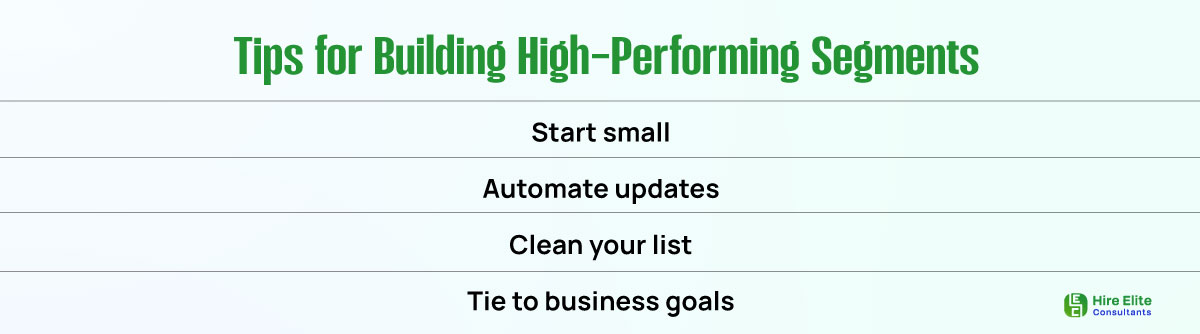
Start with the data you already have. Don’t try to create dozens of complex segments right away. Focus on a few core behaviors or lifecycle stages that drive real value.
Use automation to keep segments current. Stale data leads to misfires. Ensure your platform updates tags, scores, or fields in real time.
Regularly clean and refine your segments. Remove unengaged users or trigger reactivation sequences to maintain a healthy list.
And finally, always align segmentation with your business goals. Whether it’s nurturing leads, driving purchases, or improving retention, make sure your segmentation strategy supports the outcomes that matter most.
Segmentation isn’t Optional, it’s Essential
Whether you’re using Mailchimp, ActiveCampaign, or Klaviyo, smart segmentation is what separates average email marketers from exceptional ones. When your messages align with your audience’s behavior, lifecycle stage, or business needs, they have a greater impact, perform more effectively, and convert faster.
You don’t need fancy tools or endless data to get started. Just a clear understanding of your audience, consistent tagging or tracking, and a willingness to personalize. Once you build your segments, your emails stop feeling like blasts and start feeling like conversations.